
Newsletter 171

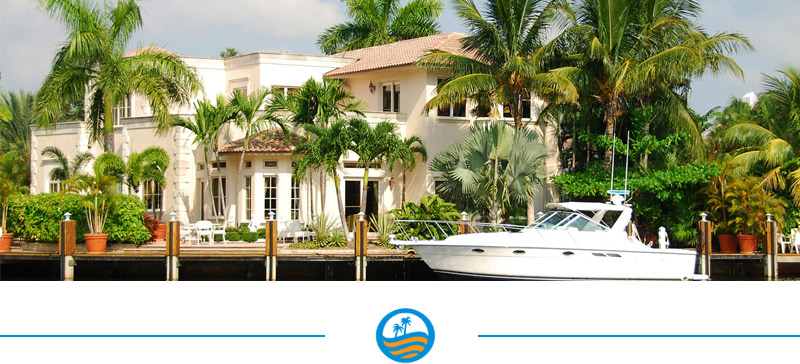
Unlike most of the country, we enjoy summer weather all year long. The difference for us on the Suncoast is that the summer months bring us into the dreaded storm season. Our typical weather in the summer months consists of late afternoon rains and oppressive heat and humidity. So far this year, the rains and violent thunderstorms have been occurring daily, frequently during the middle of the night, or in the late afternoon (or both). We are grateful for the summer rains, which avoided us last year and thrust us into drought situations. The landscaping is certainly lush and green, thanks to the rains so far this season.
The one summer cloud that hangs over everyone is the angst and nervousness of another storm season, given what we experienced last year. It’s safe to say that everyone hopes for a quiet storm season this year. I don’t know if hope will play into the mix, but we have to try to put positive thoughts out there, and hopefully mother nature will be listening.
Hurricane season starts in a week, and we’re all hoping and praying that our area is spared from the devastating storms this year. Everyone I talk to has a story (most very scary) about what happened to them and their properties last fall. So it’s natural that we all have a knot in our stomachs as another storm season is upon us.
So we do our best to hydrate, stay cool, dry and try to avoid the brutal mosquitoes that are everywhere!!!
Affordable housing and living expenses in our area have been topics of much discussion lately. A group consisting of high profile local non-profit representatives have put together an action plan for affordable housing, and that story is included in this month’s newsletter. Please continue reading for more.
So please grab a coffee or a beverage of your choice and enjoy the latest news from the Suncoast.
NEWS FROM THE SUNCOAST …..
ACTION PLAN FOR AFFORDABLE HOMES
No matter how you slice the numbers, Sarasota County has a deep shortage of affordable housing. And it’s getting deeper. Consider that more than 47,000 households in our county spend more than 30% of their income – the standard for affordability – on housing. Of them, more than half – about 25,500 households – pay more than 50% of their income for a place to live. When a household must spend that much on housing, it’s difficult to save or to pay for other necessities like health care, child care or healthy food, let alone an overall good quality of life. Fortunately, we now have a blueprint to create the housing Sarasota County needs to expand affordability, offering more residents an opportunity to live with dignity. The Sarasota Housing Action Plan, produced by the Florida Housing Coalition and commissioned by the foundations we lead, puts hard numbers to the current and growing crisis. It then lays out clear strategies with an array of actions to directly tackle the issue. The households facing the brunt of Sarasota’s affordability challenges are the people who form the backbone of our community. Think teachers, nurses and home health aides, paramedics, police officers, and service and hospitality workers. That’s because the bulk of the most common occupations here simply don’t pay enough to meet basic housing costs. In fact, nearly 70% of our workforce is in jobs considered “low income” for a household of one. At the same time, an influx of wealthier new residents is driving up housing costs and reshaping the market to cater to higher-end interests, often at the expense of affordable options. These new residents also drive up demand for essential services and the professionals to provide them. So as we hire more and more people in lower-wage jobs, they are forced to live farther and farther away due to lack of affordable homes. That puts additional stressors on families and makes it harder for employers to find and keep qualified staff. It’s just not sustainable. To meet our current and future needs, the report estimates 15,000 new affordable housing units must be built by 2035. That’s achievable – but it requires intention, commitment and coordination across the community. The Action Plan, available on our foundations’ websites, presents five core strategies to create the safe, quality affordable housing Sarasota County needs. These approaches have proven successful elsewhere and are informed by localized data. Key to maximizing their impact will be collaboration: there are roles in the plan for policymakers, financial institutions, major employers and philanthropic organizations like ours. There are also reasons for everyone who enjoys Sarasota County’s lifestyle to advocate for the plan’s success. The lead strategy is the following: “Deploy all possible funding sources for affordable housing needs.” More investment of public and private funds is required to build and maintain a sustainable supply of housing options. To those who say the market should take care of this, it clearly has not done so – and the report explains that it won’t do so alone. Other strategies include “reforming zoning and land-use regulations” and “dedicating appropriate public and private land toward affordable housing goals.” More-flexible regulations would allow more homes of different types in efficient and resilient areas, facilitating more housing choices near community amenities and infrastructure. Identifying and using surplus land owned by a variety of entities – from local governments to hospitals, religious institutions and major employers – can build long-term affordability while also ensuring environmental resiliency. The final two strategies are all about engagement. A broad range of industries, public-sector entities and community-based organizations have a vested interest in safe, affordable housing options for the communities they serve. They and others can be tapped to “form and sustain strategic partnerships” that generate results. As the old saying goes, those who are closest to the problem are closest to the solution. In addition, we must also “support and engage the community members this plan aims to serve.” For more information on this story, courtesy of the Sarasota Herald-Tribune, please click here: Affordable Housing Action Plan
REPORT: FINANCIAL SUFFERING FOR FAMILIES
Thousands of Sarasota County seniors continue to fall into economic hardship year after year, according to a new report that has researchers sounding the alarm. Meanwhile, the amount of income required to survive in Sarasota County for a family of four has soared to over $100,000 – likely causing what researchers found to be a major influx of growth in adjacent Manatee and DeSoto counties. These results are part of the State of ALICE 2025 report released Monday, May 12, by United Way Suncoast and its research partner United for ALICE. This latest data on populations known as ALICE – or Asset Limited, Income Constrained, Employed – cover changes from 2022 to 2023. The results reflect widespread financial suffering for working families across United Way Suncoast’s five-county region, which includes Sarasota, Manatee, DeSoto, Pinellas and Hillsborough. But of those five counties, it was Sarasota County that saw the largest rate of growth in its “survival budget” – or the income needed to survive for a four-person family consisting of two adults, an infant and a preschooler. In that one year, the survival budget rose 10% to $104,424 for Sarasota – a county where the median income is only $77,705. The rate of increase for the five-county region as a whole climbed 8%. “That jump is quite significant,” said Aaron Neal, United Way Suncoast’s director of data analysis about Sarasota County. “It was very jarring.” Pinellas was the only other county of the five to see its needed “survival budget” surpass $100,000, reaching $108,480. That compares to its median income of just $70,768. Likely as a consequence, Neal said, both Pinellas and Sarasota experienced lower population growth between 2022 to 2024 in comparison to the other three counties: only 0.4% for Pinellas and 3.1% for Sarasota. In those same years, Manatee’s population ballooned by 6.8% and DeSoto’s by 7.3%, Neal said. Following demographic trends of the past, residents in all probability are being pushed out of more expensive areas and searching for more affordable places to live in neighboring counties, he added. For instance, in 2023 Manatee’s survival budget was $95,000, almost $10,000 less than Sarasota’s, and its median income was higher at $79,524. In DeSoto, which saw the biggest population growth, the survival budget was $77,928 – almost $30,000 less than Sarasota’s – while the median income was $50,868. Such moves can leave many working families with long commutes between home, jobs, and their children’s childcare and schools, Neal said. The phenomenon also puts more cars on the road and yet another burden on the shoulders of working parents who need to afford and maintain reliable transportation. “The ALICE data reveals what too many families in our community already know — that working hard is no longer enough to achieve stability,” said Jessica Muroff, CEO of United Way Suncoast. “These are our teachers, health aides, childcare workers, and essential staff — the people who keep our communities running,” she added. “They deserve the dignity of financial security.” In addition to working families, seniors in Sarasota County are suffering. As with the last update a year ago, this report showed that almost half of all senior households in Sarasota County are below the ALICE threshold. But what was not expected this time was how much that population would continue to grow. For the third consecutive ALICE update, the number of 65-and-older households that fell below the ALICE threshold – which includes ALICE households and those below the poverty line – spiked by thousands. “It’s way more stark than we anticipated,” Neal said. From 2022 to 2023, those household numbers catapulted from 48,600 to just over 52,600 – an increase of 8.2%. While researchers were expecting the senior number to go up – “it still puts your jaw on the floor,” Neal said. Please click here for more: Report: Financial Suffering For Families
MOSQUITO BATTLE WEAPONRY USES WIDE VARIETY
The summer season brings long days and more sunlight, along with an increased risk of getting bit by the most deadly animal on the face of the earth: the mosquito. To mitigate that risk, Sarasota County Mosquito Management Services will use mosquito sprayers, place sentinel chickens throughout the county and deploy mosquito fish in small bodies of water. The mosquito sprayer has a large vortex on the back that contains larvicide that helps manage larval populations before they can grow and hatch into flying, biting adults. This new tool is a nonchemical treatment, is safe to be around and will be used for larger areas such as ponds, lakes, and parks. Sentinel chickens play a vital role in monitoring for mosquito-borne illnesses, including West Nile Virus. There are 12 different flocks (with six chickens in each) placed throughout Sarasota County. “It’s important to have multiple chickens in a flock to attract multiple mosquitos,” said Mosquito Management Services Manager Wade Brennan. The chickens undergo a weekly blood test that is taken to state labs in Tampa and tested for the presence of antibodies. Brennan explained that when determining where the chickens will go, they assess different factors such as where large mosquito populations are present and where there are more susceptible inhabitants, namely elderly and school-aged children. Some of the fowl even have names, such as retired sentinel and official outreach chicken Bluey. The agency also releases over 25,000 mosquito fish in various bodies of water every year. People can take precautions themselves by implementing the five Ds: dump anything that can contain water, drain standing water, avoid dusk and dawn, defend with repellents, and dress properly. Florida Department of Health in Sarasota County spokesperson G. Steve Huard said that the most common mistake he sees is people not understanding how little water it takes to breed mosquitos. “Think of a bottle cap and think of that bottle cap being filled with water – that can become a breeding ground within three days,” said Huard. “So if you have a couple of bottle caps in your yard that are just collecting water, then you can very quickly end up with mosquitoes in your yard and around your house.” People should wear long, loose-fitting clothes and apply repellent on top of that so that they have “two layers of protection,” said Brennan. Mosquitos are known to carry viruses such as eastern equine encephalitis, dengue and Zika. As of June 12, Sarasota Mosquito Management has tested over 320 serum samples from their chicken flocks and 6,000 mosquitos for viruses – all have been negative. Brennan said that even though there is currently no disease activity, that won’t be the case all summer. “We have some natural disease transmission cycles that will occur and those disease risks are inevitable to go up in the months of July, August, September and October,” said Brennan. “When it comes to trends related to disease, the main trend is we never know what we are going to be facing each year. There’s more to read here: Mosquito Weaponry
SARASOTA COUNTY PONDERS STORMWATER AGENCY
The Sarasota County Commission is considering creating a new department whose sole focus would be managing stormwater, after public trust in their ability to prevent flooding has cratered entering the 2025 hurricane season. County Administrator Jonathan Lewis has been tasked to find out how the new department would work logistically and financially. He said in a statement that he would eventually present the commission with scenarios involved with “staffing, funding, functions, assets, and logistics of eliminating the Public Works Department and creating two departments − one a Stormwater Department, and most likely, the other would be a revamped Transportation Department.” Lewis’ goal is to have all this ready to present to commissioners by July’s budget workshops. The topic was initially brought up by Commissioner Tom Knight at a meeting recently. “I think that public confidence has waned in us, so I’m going to make a discussion of making our stormwater a separate department named: Stormwater Division Manager,” Knight said. The commissioner envisioned a department head responsible for knowing the history of stormwater in Sarasota County, ensuring the local officials are trained in flood mitigation, and reviewing what went wrong in recent flooding events. He called the job of managing all county stormwater “a heavy lift” for one division. Commissioner Mark Smith said he wouldn’t want a new entity to duplicate the existing county stormwater division. He and his colleagues voted unanimously to pass the assignment to Lewis. The board had some confusion about the difference between a division and a department. The county’s current stormwater division is run by Paul Semenec and falls under the Public Works Department, which is headed by Spencer Anderson. The Public Works Department also oversees Transportation and Field Services Under Sarasota County’s organization, a department is overseen by an Assistant County Administrator and reports to the commission at public meetings. Jamie Carson, a county spokesperson, said it was too early to say what the commission’s decision would mean for the current incarnation of the Public Works Department. She stressed that nothing has been finalized, and the board does not yet have a solid plan to vote on. Please click here for more: Sarasota Ponders New Stormwater Agency
HOUSING PRICES SEE DOUBLE-DIGIT DROP
The cooling trend in the Sarasota-Bradenton area real estate market accelerated in April, according to a new report, with median sale prices dropping and inventory continuing to grow. The Realtor Association of Sarasota and Manatee’s April findings noted some of the steepest drops in median sale prices that the region has seen in years. The association attributed those declines, as well as a cooled pace as measured by rising inventory, to a lingering post-pandemic market stabilization. Median sale prices in single-family homes and townhomes/condos in both Sarasota and Manatee counties experienced a year-over-year decline from April 2024, according to the report. It’s the first time those metrics have all dropped by double digits since the Realtor Association published its first available market activity report in 2016. In Sarasota County, the median sale price on a single-family home sank 13% — from $540,000 to $470,000 — from April 2024. The median townhome and condo sales price fell 14.9% since last April, from $399,000 to $339,500. Manatee County fared similarly, with a 12.5% drop in median sale price from $530,000 last April to $464,000 this year. Townhomes and condos declined 14.8%, from $352,420 to $300,220. The Realtor Association’s April report attributes these drops to a natural market correction: a persisting stabilization that’s followed a pandemic-fueled housing boom in the region. Other experts like – Sean Snaith, director of the University of Central Florida’s Institute for Economic Forecasting – agree. “The price increases that came in the COVID-19 era were not sustainable,” Snaith said. “Things that can’t go on forever don’t.” Inventory, though slowing in the pace of its growth, is still the highest it’s been in years. Sarasota County currently has a 7 month inventory of single-family homes, which is a 37.3% year-over-year increase. Manatee County saw a similar jump, with a 33.3% increase in single-family home inventory. Townhome and condo inventory followed the same pattern. Sarasota County experienced a 43.3% increase from last April and Manatee County’s inventory rose 30.2%. The numbers are still surging, but the inventory spikes are tame compared to those in 2022 and 2023. The market experienced year-over-year increases reaching as high as 200% and 300% in those years as the market cooled after the pandemic-fueled buying frenzy. The Realtor Association says the slowdown in the rate of inventory growth is another sign of a stabilizing market. The numbers are encouraging overall, the Realtor Association said in its report, pointing to a market that will continue to see more balance. “While we’re seeing a natural correction from the record highs of recent years, the steady pace of sales and the more moderate growth in inventory indicate a return to healthier market conditions,” Realtor Association of Sarasota and Manatee President Debi Reynolds said in the report. There’s more on this story here: Home Prices Drop
HISTORIC SIESTA KEY HOME HITS MARKET
A Sarasota School of Architecture-designed Siesta Key home is hitting the market. The Ness House, a 4,006-square-foot home at 7647 Sanderling Road, is listed for $5.3 million. The house, designed by Sarasota architect Tim Seibert, was built in 1958 and inspired by the sleek, minimalist Sarasota School model. Named for the original owners who worked with Seibert on a 1971 renovation of the 1958 design, the Ness House sits on nearly an acre in Siesta Key’s Sanderling Club neighborhood and features a 135-foot stretch of Heron Lagoon. It includes four bedrooms and five bathrooms as well as several open gathering spaces. The home is characterized by its white tile, natural light and gallery-like feel created by open floor plans, according to a press release. The Ness House was designed with flow in mind: Each of the three guest bedrooms includes a sliding glass door to the outside, and the open foyer, living area, kitchen, and “Florida room” dining space are meant for entertaining. The grounds also include an outdoor kitchen with bar seating and lounges, a landscaped courtyard and additional open space. The property is notable for its “Lambolithic” construction method of solid poured concrete, pioneered by original builder John Lambie. It received historic designation in 2011 and has since undergone more modern renovations. “The Ness House stands as a remarkable convergence of architectural heritage, contemporary elegance, and natural beauty,” said Joel Schemmel, the home’s listing agent. “This is a rare opportunity to own a piece of architectural history reimagined for modern coastal living.” The Ness House is listed by Premier Sotheby’s International Realty. There’s more to read here: Historic Siesta Key Home Hits Market
LAKEWOOD RANCH ROAD AHEAD GETS CLEARER
Lakewood Ranch has gained a key approval to build the main road through its future expansion project, called Lakewood Ranch Southeast. The Sarasota County Commission voted unanimously recently to remove a swath of land in the pending Lakewood Ranch Southeast development from an existing conservation easement. The decision allows the Lakewood Ranch to build Bourneside Boulevard, which will serve as the community’s main artery, through the conservation area. The vote removes about 110 acres from the original conservation easement to allow for the road and includes them in Lakewood Ranch Southeast’s Alternative Greenway Buffer, a piece of land that’s mandated for conservation per the development’s approved overall development plan. That buffer is under its own restrictive covenant that precludes development. The new language releases 29.4 acres from the conversation guidelines, meaning they can be developed and Bourneside Boulevard can run through the land. The leftover acreage will remain untouched, according to county documents. The approval comes as Lakewood Ranch expands southward into Sarasota County, with plans for 5,000 new homes on 4,100 acres east of Interstate 75 between Fruitville Road and University Parkway. In 2022, the County Commission approved Lakewood Ranch Southeast as part of a Master Development Order, which incorporates it into the county’s long-term plans as long as it checks certain design boxes. The developer received commission signoff last month for Project Area 2, which will include 1,400 residential units − 200 affordable units among them. The first, third, sixth and seventh of the Lakewood Ranch expansion’s seven total project areas received narrow commission approval in January. There’s more on this story here: LWR Road Ahead Gets Clearer
ANNA MARIA SEEKS FUNDINGS FOR PIER REBUILDING
The city of Anna Maria aims to rebuild a public pier destroyed during hurricanes Helene and Milton, but city officials are seeking commitments from Mote Marine, Manatee County and area state officials to recreate what was lost during the storms. The Anna Maria City Pier was home to Mote’s Marine Science Education & Outreach Center, which operated on one side of the building since May 2023, and an independent City Pier Grill, which operated on the other. Manatee County capitalized on the pier’s convenient location and its desire for the Gulf Islands Ferry Service to create a drop-off point for residents and tourists who wanted to travel from Bradenton to Anna Maria via ferry. The drop-off location showcased the education center and had convenient access to Anna Maria waterfronts and nearby shopping and dining, but the route was knocked out by the hurricanes along with the pier. Manatee County Chairman George Kruse said the county is a likely funding partner, but that additional sources would still be needed. He added that the presence of Mote Marine was a valuable component to the overall vision for the pier, and asked that deeper conversations be held with the organization to seek its return to the education center. “That created this pier from being a pier someone could fish off of or you could drop a boat on to being a true tourist destination and resident destination,” Kruse said. “I would wait for the ferry to come,” Kruse said. “We would just hang out in Mote, it was air conditioned, it’s pretty, it’s fun to look at with the kids, and you go. If that just becomes a vacant building, that obviously takes away some of the dynamics” of what that pier was becoming before the storms. On June 18, city officials met with Manatee County commissioners to formally begin discussions during a public meeting. To date, the city has spent $223,000 for the inspection, design and engineering of the walkway. The demolition process will begin by the end of June to clear the path for reconstruction, but the city expects costs to climb as high $1.1 million over the next three months, Anna Maria Mayor Mark Short said.”Most of the damage to the pier happened with the walkway,” Short said. “The walkway had been built differently than the ‘T’ end of the pier when it was rebuilt eight, nine, 10 years ago. Currently our engineers estimate that its going to cost $7 to $9 million. “At this point the funding is not confirmed with the exception of $2 million that the (Tourism Development Council advisory board) approved on Monday, which I know needs to go to the County (Commission) for your approval,” he said. Short also credited local state legislators who secured $1.25 million in funding for the project through the state budget process, but he is still keeping an eye on the potential for a veto by the governor before counting on any funds. There’s more on this story here: Anna Maria Seeks Funding For Pier Rebuilding
LANDMARK LIFELINE WINS PRELIMINARY APPROVAL
The city of Anna Maria aims to rebuild a public pier destroyed during hurricanes Helene and Milton, but city officials are seeking commitments from Mote Marine, Manatee County and area state officials to recreate what was lost during the storms. The Anna Maria City Pier was home to Mote’s Marine Science Education & Outreach Center, which operated on one side of the building since May 2023, and an independent City Pier Grill, which operated on the other. Manatee County capitalized on the pier’s convenient location and its desire for the Gulf Islands Ferry Service to create a drop-off point for residents and tourists who wanted to travel from Bradenton to Anna Maria via ferry. The drop-off location showcased the education center and had convenient access to Anna Maria waterfronts and nearby shopping and dining, but the route was knocked out by the hurricanes along with the pier. Manatee County Chairman George Kruse said the county is a likely funding partner, but that additional sources would still be needed. He added that the presence of Mote Marine was a valuable component to the overall vision for the pier, and asked that deeper conversations be held with the organization to seek its return to the education center. “That created this pier from being a pier someone could fish off of or you could drop a boat on to being a true tourist destination and resident destination,” Kruse said. “I would wait for the ferry to come,” Kruse said. “We would just hang out in Mote, it was air conditioned, it’s pretty, it’s fun to look at with the kids, and you go. If that just becomes a vacant building, that obviously takes away some of the dynamics” of what that pier was becoming before the storms. On June 18, city officials met with Manatee County commissioners to formally begin discussions during a public meeting. To date, the city has spent $223,000 for the inspection, design and engineering of the walkway. The demolition process will begin by the end of June to clear the path for reconstruction, but the city expects costs to climb as high $1.1 million over the next three months, Anna Maria Mayor Mark Short said.”Most of the damage to the pier happened with the walkway,” Short said. “The walkway had been built differently than the ‘T’ end of the pier when it was rebuilt eight, nine, 10 years ago. Currently our engineers estimate that its going to cost $7 to $9 million. “At this point the funding is not confirmed with the exception of $2 million that the (Tourism Development Council advisory board) approved on Monday, which I know needs to go to the County (Commission) for your approval,” he said. Short also credited local state legislators who secured $1.25 million in funding for the project through the state budget process, but he is still keeping an eye on the potential for a veto by the governor before counting on any funds. There’s more on this story here: Anna Maria Seeks Funding For Pier Rebuilding
DIVERGING HIGHWAY TRANSFORMATION CONTINUES
The central tenant of a diverging diamond interchange bucks the rule that’s defined American roadways since wagons headed westward: It asks us to drive on the left side of the road. The design is a relatively new concept, making its debut in Springfield, Missouri, in 2009. In brief, the road at a traffic light approaching an interstate interchange. Once those cars pass the on-ramp to the interstate on the left side, the road curves back to the right side at an additional traffic light. Experts say the shifting patterns smooth traffic flow at the interchanges, with vehicles making left turns to access the interstate from the left side of the road, eliminating instances where they have to cross traffic. The diverging diamond cuts “conflict points” − locations where traffic paths intersect − by more than half: a traditional cloverleaf interchange design has 18 of them, but a diverging diamond reduces that to eight. The concept is a head-scratcher, and it was a hard sell for locals who feared it would exacerbate traffic instead of alleviating it when Sarasota County became the Florida Department of Transportation’s guinea pig to first try the configuration in Florida nearly a decade ago. But champions of it are fervent in their insistence that it works. Sarasota County’s interchange at I-75 and University Parkway was among the earliest built in the country, the site of traffic backups, including exit ramp lines that snarled traffic on the interstate and frustrating drivers heading in every direction. The diamond mining didn’t stop there. Since the I-75/University Parkway interchange opened in 2017, a modified version has been built at I-75 and State Road 70 in Manatee County. Last year, another opened at Clark Road and I-75. Preliminary work has begun on the interchange at Fruitville Road and I-75, with another set later at I-75 and Bee Ridge Road. FDOT says the diamond at Fruitville and I-75 long overdue. A pandemic-era population boom in Sarasota County — 9.8% growth from 2020 to 2024, according to the U.S. Census Bureau — put cars on the road at a pace and volume that exceeded FDOT’s handle on traffic conditions. Alex Ruiz, an FDOT project manager, said there was no way to see it coming. The task now, Ruiz said, is to play catch-up: Alleviate growing traffic on I-75 with a handful of improvement plans. “We couldn’t plan ahead to see that growth,” Ruiz said. “Now we’re reacting to try to come up with all these projects.” Ruiz manages the Fruitville Road interchange construction project, which will redesign the entrance and exit network from a traditional cloverleaf shape to that diverging diamond concept that’s growing in popularity with transportation departments across the country. The project’s price tag is $177.4 million, and construction is expected to continue into 2029. The Fruitville construction and other improvements have been anticipated for years in response to growth that’s already filled major local roadways to capacity and is expected to continue. Local developers have their sights set east of I-75, with sprawling village developments like 3H Ranch, Hi Hat Ranch and Lakewood Ranch’s southeast expansion planned for the mostly rural part of the county, and transportation officials anticipate these new neighborhoods will bring traffic with them. “The growth, especially on the east side of the interstate, has been crazy in the last few years,” Ruiz said. “We needed to add capacity. Please click here for more: Diverging Highway Transformation
SARASOTA MUSIC FESTIVAL INTRODUCES NEW THEMES
In the eight years since he was hired as artistic director of the Sarasota Music Festival, Jeffrey Kahane has been working to refresh the three-week training and performance program by injecting new themes and ideas to enhance the experience for the young musicians and audiences. Last year’s introduction of improvisational training with such faculty members as Mike Block and Tessa Lark will continue for another year of the festival, which Kahane said has the overall theme of “Music as a Mirror of History.” Kahane, who once contemplated switching from music school to studying history, said the theme was inspired by the book “Times Echo” by Jeremy Eichler, a former music critic for The Boston Globe. “It is basically a study of the middle of the 20th century, built around, to some extent, the Holocaust, but more generally, around the First and Second World Wars, and it uses works by four of the most important composers – Benjamin Britten, Dmitri Shostakovich, Richard Strauss and Arnold Schoenberg. “It takes one piece, one major work of each of these composers and uses it as a means of launching an exploration of how that piece mirrors a particular historical moment in which it was written,” he said. One of the pieces Eichler included was Strauss’ “Metamorphosen, A Study for 23 Solo Strings,” which was performed in one of the final concerts of this year’s festival on June 20 in the Sarasota Opera House. They are among the varied works that were performed by 60 emerging musicians who were invited to spend three weeks in Sarasota as Festival Fellows. They study with a rotating faculty of professional musicians, working together in classes, masterclasses, one-on-one sessions and in chamber and orchestral concerts open to the public. The Sarasota Music Festival began in 1965 as a one-week event but grew within two years to the now-standard three-week program. Each year, 60 emerging musicians, most still in college or graduate school, are invited to spend three weeks in Sarasota studying with a rotating faculty of professional musicians. They work together in classes, master classes, one-on-one lessons and in chamber and orchestral concerts. Please click here for more: Sarasota Music Festival Introduces New Themes
ENVIRONMENTAL GROUPS APPEAL E.P.A. PERMIT
Local and national environmental groups filed an appeal this month with the U.S. Environmental Protection Agency of its decision to grant a modified waste discharge permit for the Ocean Era Aquaculture demonstration project off the south Sarasota County coastline. The 70-page petition for review filed with the EPA Environmental Appeals Board by New Orleans-based attorney Clay Garside of Waltzer Wiygul & Garside June 14, asked the board to invalidate the modified National Pollution Discharge Elimination System permit approved by the EPA last month. “The EPA must provide a thorough explanation of its process and its ultimate finding,” Garside wrote, arguing the agency must prohibit the discharge if it can’t assure the waste “will not significantly impact the surrounding environment, harm endangered species, or cause unreasonable degradation.” In a prepared statement, Neil Anthony Sims, founder and CEO of Kona, Hawaii-based Ocean Era, expressed frustration about the latest roadblock to his effort to establish the fish farm dubbed Velella Epsilon as a demonstration project 45 miles southwest of Sarasota in federal waters west of Venice and north of Englewood. “One of the goals of this demonstration project was to pioneer the permitting process for offshore aquaculture in U.S. Federal waters,” he added. “This project has, at least, demonstrated this much: the current permitting framework is deeply dysfunctional, and regulatory reform is clearly needed.” Ironically, Ocean Era’s decision to seek a modified permit, by changing the fish species from Alamco jack to redfish and modify the anchoring system for the offshore net pen opened the possibility for environmentalists to renew their challenge. The project, funded by the National SeaGrant Program, is also meant to give the Florida fishing and boating community a chance to make their own decisions about offshore aquaculture projects. Garside alleges that the modified permit was illegal under the federal Clean Water Act and that, among other things, the EPA failed to look at the cumulative impacts of the project and asserts that the permit is based on outdated research. Attorney Marianne Cufone, executive director of the Recirculating Farms Coalition, one of the environmental groups challenging the permit, agreed. “The modified permit is now based on documents that are five years outdated,” Cufone said.“The Gulf has changed in five years. There’ve been 11 hurricanes, we’ve recognized a new endangered species – Rice’s whale – we’ve had small tooth sawfish and rays spinning and swimming erratically and dying,” she added. “There’s been a lot of changes in the last five years, and so one of the things to note is they ought to redo their environmental assessment on this permit.” Fears raised by the proposed fish farm include the environmental impact of concentrated waste – specifically as a potential source of nutrients for red tide – and health impacts that could spread from farmed to wild fish. Please click on the link for more: Environmental Groups Appeal EPA
SUNCOAST HOME CONCIERGE SERVICES
Trusted care for your home

Phone: (941) 961-4309
Fax: (941) 923-4983
Website: www.SuncoastHomeConcierge.com